
אודותי
Suggestion: Watch episodes one through three in order, halting after major story beats.
Document Uzi's visibility, dialogue frequency, and repeated iconography — eye patterns and rusted instruments.
Note time markers for instances of alliance shifts or origin revelations.
Study the murder drone N and companion automatons:
record spoken lines per segment, observe clothing color choices, diagram connections throughout early segments.
Record three succinct traits for each significant character and include voice performer information where known.
Leverage static frame captures to exhibit design changes over time.
When compiling a reference document, provide specific measurements:
episode visibility per character, proportion of screen time represented as percent, notable dialogue extracts with timestamps, and citations from creator discussions or illustrated volumes.
Advise on viewing arrangement for beginners:
pilot, episode 2, episode 3, then a focused rewatch centered on interpersonal dynamics.
Visual checklist: dominant highlight colors, outline changes, characteristic wear markings.
Emotion tracking guide: points of contention, moments of confidence, build-up sequences; verify conclusions with voice work and animation timing per segment.
Main Protagonists
Focus on each main character's journey, driving forces, and fighting approach when developing critique, costume recreation, or portrayal.
For a defiant, anti-establishment lead:
emulate combative body language, fast staccato vocal delivery, and regular sardonic smiles;
clothing decisions should emphasize damaged workwear, exposed electrical components, and lopsided add-ons;
equipment to wield: hammered tool, small glowing chest component;
hair approach: untidy cropped cut with individual colored lock;
motion indicators: lowered stance accompanied by abrupt acceleration;
voice performance: sharp and swift, interspersed with fleeting fragility in close encounters.
For a precise, responsibility-bound protagonist who progressively opens up:
use measured, minimal motion and reduced inactivity;
dialogue approach: level inflection with crisp consonants that loosen during empathetic scenes;
attire: smooth non-reflective armor, exposed limb mechanisms, subdued color scheme;
appearance/styling: minimal weathering at pivot locations;
battle arrangement: regulated hits, employing terrain for tactical superiority.
For creative teams and production staff:
contrast emotional cores explicitly–one figure motivated by survival and mistrust, another by programmed duty and rising curiosity;
develop sequences where speech moves from biting humor to gentle revelation through a handful of short segments;
avoid long explanatory monologues;
demonstrate consequences through brief gestures and silences.
Technical suggestions for art crews and costume designers:
maintain outline definition during quick movement by amplifying head, shoulder, and body contours;
integrate scattered light-emitting diode effects with fluctuation sequences connected to emotional moments;
reinforce joints with concealed padding for stunt safety while preserving articulation;
log audio recordings with several slight alterations in pitch and breath to preserve refined evolutions.
Relationship mapping:
measure confidence journeys on a zero-to-five trust gauge and position crucial changes at episode milestones;
preserve tensions relational by linking feeling transitions to modest behaviors such as passed equipment, fixed connection, or defended friend rather than lengthy dialogue;
employ tangible objects to denote advancement between sequences.
Screenplay approach:
open pivotal scenes with sensory detail–metallic tang, motor whine, distant siren–then expose motive through behavior;
let visual beats and short exchanges carry exposition while maintaining pace and tension.
Who is N?
Approach N as a conflicted figure:
unrelenting capability coupled with sudden openness.
Function: ambiguous agent with transforming obligations; initiates primary clashes.
Design: streamlined mechanical form, charred armor, single lit optical enhancement, compact structure constructed for speedy physical engagement.
Skills: superior combat evaluation, concealed approach, accelerated repair using molecular machinery; thrives in proximity battles and intelligence gathering.
Temperament: brief, methodical, cutting when incited; rare moments of sympathy expose suppressed pain.
Story progression: starts as solitary operative, slowly opens to alliances and sacrificial choices; moral ambiguity drives personal growth.
Significant events: opening garbage-site conflict, middle chase scene, final ledge face-off; note wordless segments and minute expressions for hidden significance.
Observation guidance: break during unspoken moments to review positioning and brightness indicators; trace clothing wear as indicator for psychological development.
Outfit recommendations: stacked protective torso covering, golden light-emitting eye piece, patterned hand coverings with visible cables, aged coloration for realistic appearance.
Fan suggestions: compose small narratives showing N in ordinary home settings to examine vulnerable aspect; generate art concentrated on thoughtful stances rather than combat.
V's Function in the Show
Treat V as narrative catalyst:
examine behaviors for recurring tendencies of survival instinct against principled dedication and chart strategic changes throughout installments to show development turning moments.
Specific guidelines for thorough analysis:
1) record appearance order and cumulative screen time;
second, list weaponry, instruments, and go-to approaches;
3) note repeated verbal hooks and micro-expressions during key confrontations;
4) record connections made or broken and situations for each turn.
Conduct analysis:
advanced environmental awareness, inclination toward surprise attacks and mental manipulation, regular employment of creative solutions when supplies limited, susceptibility when facing connections to prior relationships.
Employ these features to forecast expected options in unobserved moments.
Visual and audio cues to monitor closely:
clothing deterioration sequences that indicate recent engagements;
consistent scenery elements that operate as history references;
subtle voice timbre shifts that mark internal change;
visual framing that highlights V during moral junctions.
Interpretation approaches valuable to explore:
approach V as counterpoint for issues regarding independence and structure instead of as straightforward antagonist;
entertain interpretations where visible harshness conceals guarding intentions;
measure credibility of any isolated statement by verifying with earlier behavior.
Useful advice for fan artists and commentators:
keep moral uncertainty when producing new pieces;
introduce backstory through artifacts or short flash fragments instead of extended monologue;
stagger reveals so each novel information reexamines prior segments without opposing established occurrences.
Questions and Answers:
Which figures are central to Murder Drones and how are they defined?
The ensemble splits into multiple clear groups:
the clever survivors who reject current conditions;
the sentient worker drones with varied personalities;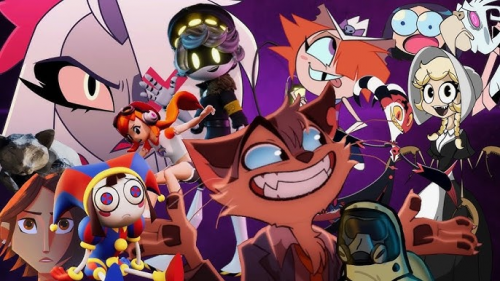
the lethal assassin-class drones that enforce corporate will;
and creator-built individuals who stand for vanished or damaged power.
The resilient individuals typically are tenacious, quick-witted, and morally versatile;
service robots run the gamut from tense and funny to bravely subtle;
hunter automatons are structured, unfeeling, and periodically uncertain;
authority figures are cold, calculating, and driven by self-preservation.
These variations spark friction and unanticipated collaborations over the episodes.
How does the interaction between the protagonist and the hunter robots change over time?
Initially their exchanges center on staying alive and shared danger:
one side wants to live, the other is programmed to exterminate.
Step by step, small gestures — changing commitments, mutual grief, and compassionate moments — obscure clear combatant/subject functions.
A few drones begin to question their orders, and the protagonist learns to exploit personal doubts rather than only fight.
Affective scenes, private exchanges, and conscience struggles advance several personalities toward joint efforts, while others commit more strongly to their original missions, creating strained encounters and transforming relationships.
Are there hidden design details or callbacks in the characters that longtime viewers might miss?
Indeed.
Creators and artists utilize consistent visual indicators:
color patterns suggesting affiliation or previous suffering, recurring symbols placed in backgrounds, and refined outfit deterioration indicating a character's background.
Minor set items or wall art occasionally reference previous installments or the production company's other works.
Speech performance options like a skipped syllable or a dialect shift can also disclose emotional struggle or an origin detail before it is presented visually.
Which character’s origin story is the most surprising, and why?
The most unexpected origin belongs to a character introduced as an antagonist who slowly reveals a sympathetic past.
Initial portrayal emphasizes danger and effectiveness, but subsequent recollections and casual remarks reveal remorse, desertion, or control by more significant forces.
This difference between duty and memory reshapes how their activities are viewed and pushes other characters to re-evaluate whether vengeance or sympathy is the correct response.
How do voice acting and animation work together to make the cast feel alive?
Voice work and visual design are strongly integrated:
voice artists determine feeling atmosphere using rhythm, note changes, and small pauses, while animators align facial expressions, eye actions, and positioning to those decisions.
A mocking statement gains edge through lifted brow and swift head rotation;
a period of exposure is reinforced by drawn-visit website, find out details, open link, this resource, suggested resource motion, softer illumination, and quiet vocal performance.
Audio composition and music signals aid movement between threat and comedy, assisting viewers in recognizing delicate changes in intention or feeling even without direct explanation.
Who comprises the primary cast of Murder Drones and what characterizes their connections?
The central duo audiences primarily concentrate on is Uzi Doorman, a rebellious labor machine with a quick wit and a thirst for information, alongside N, a detached, effective hunter droid assigned to destroy labor units.
Uzi symbolizes the tough, spontaneous quality of the survivors, while N initiates as a continuous hunter and afterward exhibits evidence of psychological turmoil.
Their interactions mix confrontational banter, reluctant cooperation and moments of unexpected empathy, which pushes both characters into new choices and shifts how other drones treat them.
In their orbit are auxiliary worker bots who create a collective with particular tendencies, and additional hunter machines who serve as enemies or competing factions, building stress that molds each personality's actions.
מיקום
תעסוקה
המשתמש החדש ביותר שלנו: tkslorrie589188 הודעות אחרונות הודעות שלא נקראו
